Build a Portfolio That Grows With You, Not One You Keep Rebuilding
Most developer portfolios become outdated because every update requires editing code and redeploying. A dynamic portfolio with an authenticated admin dashboard makes managing projects, blogs, and experience effortless.
Build a Portfolio That Grows With You, Not One You Keep Rebuilding
A portfolio is more than just a website—it's your professional identity. Yet, many developers build a portfolio once and rarely update it. The reason isn't a lack of projects; it's because most portfolios are built as static websites that require code changes and redeployment for every small update.
As your career grows, your portfolio should grow with it.
The Problem with Static Portfolios
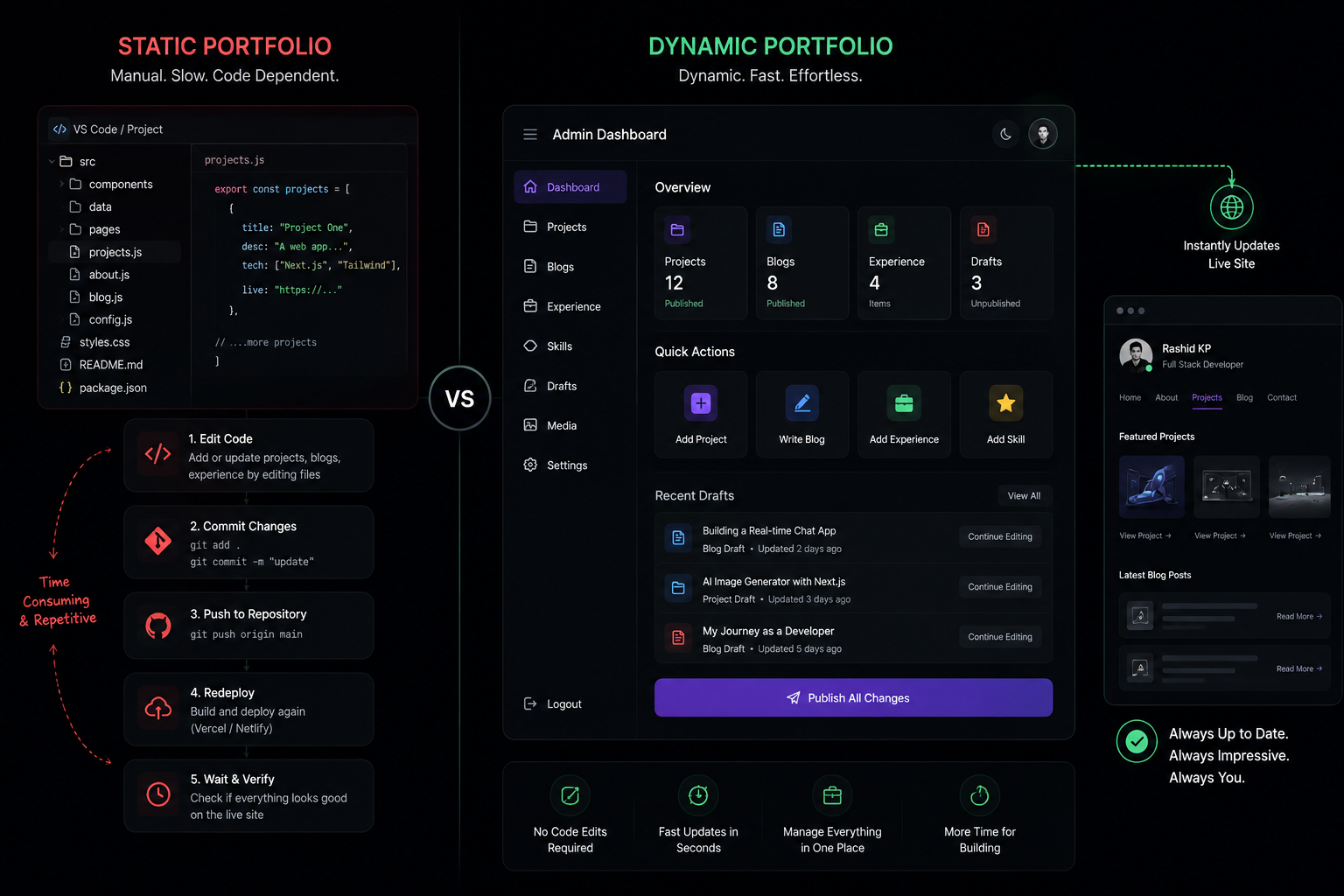
Traditional portfolios usually store everything directly in the codebase. Every new project, certification, blog post, or achievement requires modifying source files, committing changes, and deploying the application again. This workflow is manageable at first but quickly becomes inconvenient. Eventually, many portfolios become outdated, giving visitors the impression that the developer is inactive—even when they're constantly learning and building.
Why Dynamic Portfolios Are Better
A dynamic portfolio separates content from the frontend. Instead of hardcoding everything, portfolio data is stored in a database and displayed automatically on the website. Updating content becomes as simple as filling out a form. Without touching the source code, you can:
- Add new projects
- Update work experience
- Publish blogs
- Upload certificates
- Edit skills
- Manage achievements
Your portfolio becomes a platform instead of a one-time project.
The Power of a Separate Admin Dashboard
One of the biggest improvements is introducing an authenticated admin panel. Rather than editing files manually, you log into a secure dashboard where all your content can be managed in one place.
An admin dashboard can provide:
- Secure authentication
- Draft and publish workflow
- Project management
- Blog management
- Experience management
- Skill updates
- Image uploads
- Content editing without redeployment
This keeps your public website clean while giving you complete control behind the scenes. Blogging Made Simple Most developers don't blog consistently because publishing often requires creating Markdown files, updating routes, and redeploying. With a built-in blog management system, writing becomes much easier.
You can:
- Save drafts
- Publish instantly
- Add thumbnails and cover images
- Organize posts with tags
- Set reading time
- Edit articles anytime
Easier Maintenance
Separating content from the frontend makes future updates significantly easier. You can redesign the entire website without rewriting projects or blog posts because all the content already exists in your database. Adding new sections like testimonials, certifications, or case studies becomes straightforward.
A Portfolio That Evolves
A modern portfolio should be more than a digital resume. It should become a place where you showcase projects, share technical knowledge, document your learning journey, and continuously improve your professional presence. The easier it is to update, the more likely you'll actually keep it updated.
Final Thoughts
The best portfolio isn't the one with the most animations or the trendiest design. It's the one that stays current. By moving from a static website to a dynamic portfolio powered by a secure admin dashboard, you save time, reduce maintenance, and ensure your latest work is always visible.
Build it once. Update it anytime. Let your portfolio grow as your career grows.